Showing posts with label Research. Show all posts

Friday, 8 January 2016

Research: Censorship


Censorship

Censorship within media is something that comes up and is always tested. In the music industry censorship can be pushed to its limits as it can be seen as hard for artist and audience to find the line between freedom of speech and expression also known as 'art' and what is seen as inappropriate. 

If explicit content is mentioned or seen in a music video or soundtrack it is usually followed up with the 'Parental Advisory' symbol. This symbol is used to notify the public of its explicit content and that it is up to the parent or guardian's consent that any person under 18 can be exposed to this. 

Genres that have been known to carry the 'Parental Advisory' symbol:
  • Hip-Hop - Violent, sexual and drug abusive content.
  • R&B - Sexual content within lyrics. 
  • Rock - Violent and drug abusive content.
There are 14 topics that have the right to be censored if presented in either a sound track or a music video, these are:
  1. Shock - Footage that the audience could find traumatic and disturbing.
  2. Violence - Scenes too violent can also be deemed inappropriate. 
  3. Graphic Representation - If scenes are considered as to graphic (gory or explicit) the can be censored. 
  4. Language - Explicit language may be found as inappropriate by the audience.  
  5. Sexual Violence - Sexual Violence is a topic that could make viewers very disturbed and uncomfortable. 
  6. Domestic Abuse - Scenes of domestic abuse and violence could possibly upset the viewers. 
  7. True Events - Using true stories and events is a very sensitive subject as people that where possibly affected by these events could find it upsetting or offensive. 
  8. Culture - If culture is shown in the wrong way it can be seen as offensive by others which is why it gets censored. 
  9. Race - Racial misinterpretation can also be seen as offensive.
  10. Class - Like racial interpretation social classes can also find misinterpretation offensive.
  11. Corrupting the young - Corrupting children and youth (underage) can lead them to do things such as copy what they see or be influenced by things they do not fully understand which is potentially dangerous for them to do so. 
  12. Political Controversy - Political controversy has the right to be censored as it could slander a  political figures reputation and change the peoples political views which could lead to problems such as rioting and disruption within society.  
  13. Nudity & Sex - Sex and nudity can be seen as inappropriate in the eyes of young children hence the reason why it is censored. 
  14. Drug Abuse - Drug abuse is an illegal activity which is why it is not often shown and is censored. 
All 14 topics can be censored because a large group of people can come to disagree with what is shown and might find whatever is shown as offensive, upsetting or inappropriate for viewing, hence the reason why is can be censored. 
Wavey music video


In this music video the music video itself does not breach any rules of censorship for any scenes of it to be censored out  as it is not an excplicit music video, however the sound track contains diluted explicit lyrical content (very few swear words) and the N word which is said twice by artist two (Youngs Teflon) which would offend our viewers, it is for this reason why we have planned to censor out the lyrics of the soundtrack and blur artist lip sync within the music video. 

To conclude, my understand of censorship has been beneficial because it is something that me and my group have to consider because our music video contains themes of drugs and violence within  the music video's soundtrack and visuals which viewers could potentially find upsetting which means that we need to be careful about what we show to the people when filming the music video so that we film enough to make it enjoyable but not too much to make it explicit to the highest possible level.

Sunday, 8 November 2015

Research: Sub Cultures


Sub Cultures

A subculture are groups of people who get together and unite due to sharing common values and beliefs and tastes, this can vary from the same dress sense to moral and social beliefs.They are positioned outside mainstream culture and beliefs and stick together because of their mutual disagreements. 

examples of sub cultures could be groups known as:

Punks 
Punks are a subculture that many people are more familiar with as they could be considered to be a popular subculture. It is quite easy to identify a punk as many of their traits play on their appearance:

  • Studs/spikes on clothing/ skin piercings (Doc martins)
  • Mohawk hairstyle (styling gel used to create spike affect.)
  • Leather clothing.
  • They listen to Punk music.
They have an appearance that seems to be quite intimidating, which enhances the level of moral panic they have when seen by people that follow mainstream/popular culture. However punks are known to be quite a non violent subculture that don't usually get themselves into confrontations with others, they can be known to be quite laid back and calm. 


Skin heads
Skin heads where known to be quite a dominant subculture in England during the 90's and they was rarely shown in a positive light. This is due to the  many confrontations during the times when England was just being exposed to ethnic diversities joining the country for the first time. It was relatively easy to identify a punk, as they would wear:

  • Bomber jackets. 
  • jeans. (Waist straps attached.)
  • doc Martin boots. 
  • White British (usually males.)
  • Extremely low cut hair or bald (Where the term 'skinhead' came from.)
Skin heads are known to be a violent subculture and they have been known to even have criminal behaviours as they have robbed, attacked and even killed people during the 90's. They are working class people who are quite uneducated and angry at the fact they want England to be a white British society. Their favourite preference of music is reggae. 

How sub cultures work

sub cultures do not like conformity and don't follow capitalism, they rebel against common usual values and systems that the  mainstream culture follows which is why mainstream culture considers them a threat because of their difference.

They have their own set of values, behaviour and traits. This means that they aren't consumerists and they don't purchase mainstream brands and follow mainstream trends. For example they would purchase or own IPhones, branded clothing and listen to pop music or any other mainstream genres as they tend to go for niche genres of music. (Preferably made by their subculture.)


Subcultures relationship with music

with their being so many subcultures in the world, not only do many people have different musical tastes but they also have different values, behaviour sets and morals towards life. It is for this reason why many people can fall into subcultures from listening to music.

Because the audience likes and agrees with the content of an artists lyrics they may very well end up leading the same kind of lifestyle because of their influence (being the artist.) It also works the other way around with different subcultures creating their own sound of music and having it added to  long list of niche genres meaning it has the tendency to  work both ways.


Birmingham school
Subcultures are another reason as to why the Birmingham school found fault in the Frankfurt school's theory as they felt that they didn't take in the subcultures into consideration and they just had everyone in the mainstream or the upperclass category. 

The Birmingham school believe that subcultures are a reaction to the decoding of the audience which would also mean that subcultures came from one original culture.


Dick Hebdige

Hebdige, like the Birmingham school believed that although some people think subcultures appear to be different, deep down they are the same.

He also went on to say that he believes the consumption of music video is an active process and different audiences read into the same product. As a result of this some people that choose to resist it could possibly fall into a subculture.  


McCracken's Theory

McCraken is a theorist who said. ''The post modern world is full of diversity, dynamism and creativity" His theory disagrees with the last statement that the Birmingham school made as he also said. "If we look at the array of values and ideologies then we can't say all sub cultures come from one culture." This means that he is saying their are loads of different subcultures and their beliefs behaviours and characteristics are so different that they can't all stem from one leading culture. This is true because their are different mainstream cultures in different countries, for example pop music and house is one the most popular genres in music but in america they are more known for their Hip-Hop and Rn'B songs. 

Link to Dyer
Shared cultural values can support the idea that some subcultures will share the same ideologies, values and beliefs as 'stars' (artists) which means that some subcultures could follow stars just because of these shared values. 

Saturday, 7 November 2015

Research: Popular Culture


 Popular Culture 

Popular culture is important to understand because it helps media institutions and artists to understand what is considered as popular and to increase the rate of sales and the success rate of the music they produce and put out as well as how it plays its part in what we will see in the music videos.

Popular culture
Popular culture is something that came to light during the 1980's and can be found in social aspects, more specific to media music video, radio and fashion as what is 'popular' controls what we see come from music videos, what we hear from the radio and what we see and wear in fashion. (Image below comparison of women in the 1970's and the change in fashion in present day) The term 'pop' (short for popular) came about during the 1980's and is used now to describe popular music. 


Ideas of popular culture are reinforced in the mainstream media as well as the more mainstream genres of music such as:

  • Pop.
  • R'NB.
  • Dance.
  • House.
  • Hip-Hop
It is very evident in the mise en scene used in these music videos. An example would be Future ft. Pusha-T and Pharrell - Move That Dope (which is a more modern Hip-Hop music video) and Chris Brown's Loyal ft. Lil Wayne and TYGA. (which would go under the pop category.)  These two have very different soundtracks as they belong to two different genres. However the music video contains roughly the same Mise En Scene especially with the females as they wear items such as denim shorts and quite retro clothing.   


Theodor Adorno & Frankfurt School and the pop music theory


The Frankfurt school are a group of german theorists that where known for their critical music theories and influenced by Karl Marx (Marxist Theory). They are the creators of the popular music theory and the ones who created the diagram explaining that their is a division between 'pop culture' and 'true art'. 

The popular music theory is a graph created by Adorno and the Frankfurt school to explain the different taste within music and its relationship to class and status of the audience. It is a pyramid structure with the bourgeoisie at the head and pop culture at the bottom. This shows us that the bourgeoisie are the only people that accept and understand what 'true art' is such as composed musical pieces and art galleries/paintings, whilst the working class people are too uneducated to understand this so we listen to mainstream music which is an ongoing and repetitive cycle that all sounds and looks exactly the same. 


They are also saying that we are 'too dumb' as we are working class to realize that this is all the same music and fashion being recycled and given back to the people with a few changes, for example artist Justin Beiber is considered to be one of the most well known pop artists in modern times, however if you analyse his album the argument would be that the beat, lyrics and themes all stem from the same idea with no real variation for an audience to appreciate as they are too passive to challenge otherwise. 

Hegemony
Hegemony is the mid section of this table  that was created by the a man named antonio gramsci . Gramsci was the leading Marxist theorist and is the single owner of the theory of Hegemony. The theory shows us how the bourgeoisie look down on the working class. This theory is also suggesting that the higher class/ status is in control and a more dominant social class, as they feed the working class what they want to hear and see. 

"we can judge ideology to be effective if it is able to connect with the 'common sense' of the people."- Antonio Gramsci. 

This quote could suggest that, the upper class (bourgeoisie) are the ones behind the production of mainstream music for the masses of the lower class because they are the institutions that create the artists star image to go on to create the music that the institution want to hear. Which in affect plays its part on the influence over a large society such as the working class, as they copy what the artist do and see and they absorb the same kind of music covering the same topics in a different order all the time.


The Birmingham School

The Birmingham school was another collaboration of theorists one being Stuart Hall and the theory to challenge the original Frankfurt school theory. they saw issues with their theory of hegemony as well as their cultural study and they believed in:

  • Encoding - The process by which a text is constructed by it's producers. 
  • Decoding - The way the audience receives this.
This is important because its what separates the Frankfurt school from Birmingham, this is because Frankfurt claim that that the upper class table (bourgeoisie) give the working class whatever content that they want to expose them to in music. However the Birmingham school are saying that the producers (bourgeoisie) encode a message within their music, which is evident due to the repetition in the lyrics but the twist in the theory is that the way the audience (working class) interpret and take this message is varied.

Dick Hebdige
Hebdige is our last theorist that we will be looking into and talking about why his theory is relevant to the pop culture theory. He believed that subcultures are united groups that don't apply to the pop culture theory, the are different because they do not follow any of the mainstream beliefs or fashions. Hence the reason why they are seen as a moral panic for their difference although they can offer a new perspective on the music industry. 

Monday, 2 November 2015

Research: Dyer's Star Theory


Research: Dyer's Star Theory


The term 'star' refers to a artist or actor who has been socially constructed in order to sell to a mainstream audience.

Richard Dyer stated that

"Star image is incoherent, that it is incomplete and 'open'..."
"Star must be simultaneously ordinary and extraordinary for the consumer"
"The star must be simultaneously present and absent for the consumer"

Performer/Pop star
A performer can be a person which only performs music or dances which they may or may not be famous in doing so. However, a pop star is seen to be famous and have qualities which will attract the mainstream audience. The pop star is socially constructed into what the audience wants to see which could mean dressing or looking a certain way in order to gain publicity for their music.

Dyer's four elements in recognizing a star:

- Star's as constructs

Star's are seen as artificial images in order to gain attraction. The reason in doing this is to gain popularity and maintain a loyal mainstream audience. For example, shows such as "X-Factor" expose the process in making a star. The show also portrays the cycle in which an ordinary person with a pop star voice transforms their image to fit the mainstream culture. This enables the artist to become more appealing to the audience. For example, One Direction, a band created on the "X-Factor" show the transformation in their image in order to appeal to the younger female audience.

- Industry and audience
Dyer states that stars are manufactured to make money. He argues that the artist's are a product of their own record label due to the rules the artist has to follow whilst being signed. For example, to attract the mainstream audience they may have to dress a certain way in order to ensure they are going to sell their albums and singles. The artist's rely on their image of looking 'sexy'  in order to make profit and stay in the public eye.

- Ideology and Culture

Dyer believes that stars represent cultural values and attitudes and promote a certain ideology. This is done in order to create a relationship between the audience and the artist. The artist is able to share their own beliefs and in co operate this into their music. For example, Kanye West is seen as a huge influence on the public due to his ideology and culture. His
social media profiles such as Twitter give him the opportunity to share his beliefs. Also, his song "Diamonds from Sierra Leone" gives an insight into his beliefs in the child exploitation whilst working in the mines. This shows the audience his views in political issues which may make the audience feel more 'close' to the star. 

- Character and Personality
Dyer believes that the artist is a social construct, but one with the foundation of realism. This means that the star will have very similar qualities as other idols and stars in the industry however they have their own personal interests and beliefs in which they use their fame to shed light on these problems that they feel need to be addressed and solved. This encourages people to sort these problems due to the fact that they idolize these people and because of fact they look up to and idolize the star they have a certain  level of respect to listen to what they are telling them. It can also make people like the artist if they don't, or even more so because they share mutual opinions on a problem/situation.  

Conclusion
To conclude i believe that Dyer's Star Theory has been closely watched and researched and due to the evidence there isn't much reason to disagree with this theory, for my music video I believe that star image will be used however it wont be used in terms of public messages to encourage the audience to consider a social, religious or environmental issue. 


Research: Audience Identification


Audience Identification

In media the audience is the people that take in  and receive what is made by the media institutions, for example we are the audience to when we watch a film that has been made by a media company because we are watching it. The same applies to music and music videos. 

In terms of the music industry, institutions and artists need to find the right target market to become successful. When looked into in more depth we can see that it different audiences vary by factors such as:

  • Gender.
  • Race.
  • Social Class.
  • Age.
Music institutions also categorize and group people by the skill and qualification level of their jobs. These groups are:

A = Top management, bankers, lawyers, doctors and other professionals.
B = Middle management, teachers, many 'creatives' e.g graphic designers. 
C1 = Office supervisors, junior managers, nursers, specialist clerical staff etc.
C2 = Skilled workers, trades-person (white collar)
D = Semi-skilled and unskilled manual workers (blue collar) 
E = Unemployed, students, pensioners, casual workers. 

This is because if everyone is already categorized then conducting this research would be much faster and save a lot more time. Once this is complete it is helpful because if the media institution can identify who the target audience is then they can evaluate the style of the artist and expose them to the right target audience to help them to become more successful. 

However by categorizing people like this there are disadvantages as well, because they do not taking the social factors into consideration and they only look at the job however that is no longer something that is controlled by class/ social status also by stereotyping people without doing more specific research will mean that people that do not like this will be missed as the artist isn't relevant to that specific person and it will ultimately lower the success rate of the artist. 

A table was created to break down and evaluate the audiences reaction in its different stages. (Table below) 


To conclude I believe that my media group will have a target audience aimed ages 16 - 26 years old and fall under category C1, C2, D and E. They will also have to like the Hip-Hop genre, so I need to look into what it takes to appeal to this audience to make my music video successful.

Friday, 30 October 2015

Research: Star Image


Research: Star Image


Star image within music videos is considered as a very important aspect and is usually shown within every music video in order to give credit towards the artist that created the sound track. (Image on the right: Skepta center of attention in his music video 'Shut Down'.)

What can a video do in regards to promoting star image?

This also allows upcoming stars to become familiar in the eyes of their fans and the people to help gain a higher status as it leaves a mark on the work that they do.

Music videos tend to help artists gain credit for their work and even help the audience taking a liking towards the artist themselves as a first impression. For example rapper Fetty Wap and his hit song that put him on the map. Trap Queen (video below). This was a popular song that many people heard and upon seeing the music video which contained Fetty Wap as the star image. The people began to like him also and not just the song. So to a certain extent you could say that star image within music video does play a part on whether an artist's song that puts him on the map makes him a one hit wonder or an established artist in the music industry. 


Music videos as to promote an image over an album:
In a sense music videos can be seen as more important then the album release, this is because music videos play a big part to the promotion of an artist and his work, which is why they usually release the most popular song on the album as a music video. As the music video tends to outlive the soundtrack on its own. 


How Star image can change in the industry and the role the music video has in portraying this to audiences: 


Kylie Minogue - Class case Study (80's- present)

As part of a case study to see just how much an artist's star image can change in the eyes of the audience. We choose Kylie Minogue as a prime example as she has had a big fan base from the beginning of her career and even before music. 

80's

During her child hood as she grew up on Australia's hit show neighbours, we see a young Kylie followed by a audience aged 10-15 as she was only a child herself with an innocent and sweet appearance. In the eyes of the camera she seemed to be fun jumpy and always dancing but in no way did she promote anything of a sexual nature.


She was later seen as a childhood sweetheart by the world as she was in onscreen and offscreen relationship with fellow actor Jason Donnavon.


Early 90's
During the 90's her appearance began to change and became more sexier due to the change in her audience. (more boys began have a celeb crush on star so her fanbase got bigger.) In her music her lyrics had come more sexualised like her dancing style had also changed as she was now more choreographed than before.

this cause slight disruption between her and her original audience as some girls were not ready for this sexual awakening and it was seen as intimidating.  


Late 90's

By the time that the late 90's came around Kylie's sexual image became solidified and 

2000 - present day


Michael Jackson (Childhood - last moments)
However star image is only something that truly comes to mainstream artists who make music within the pop genres, as they will receive more attention above others that make music for the neiche genres. 
An example of star image at its finest would be the late Michael Jackson. My reason for choosing Michael as the best example for star image is because he was centre stage of the media for the majority of his life and even more so closer to the time of his passing. His music also dominated over many genres and everyone knew his songs even if they didn't listen to him or the pop genre during his time.
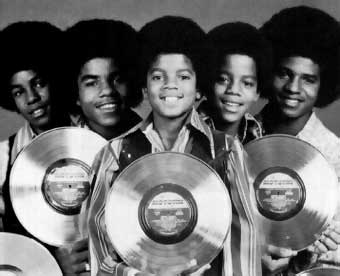
In his early years he began his musical career in the Jackson 5 a group consisting of his real brothers that was managed by his father however when his vocal talent was discovered by his mother he was given a more vocal role in the group, and in time was chosen by the people to become the lead singer of the group. Together they created hit songs such as 'ABC' and 'Who's Loving You'.


As Michael got older he began to grow out of the Jackson 5 and become more noticed as a solo artist as he made solo singles such as 'Rock with You' and 'You can't Win' from the movie Oz. Eventually his stardom began to cause friction with the group and tensions began to rise with him and his father and news broke out of accusations that he used to abuse the group and Michael especially.


Monday, 12 October 2015

Research: Intertextual Reference

Intertextual Reference

Intertextual reference is when you will see doing something in the music video that may refer to a real person or situation that has happened in real life or is extremely exaggerated. Depending on how this is presented (in a positive or negative way) is purely down to whoever put out the music which implies that this is their opinion on what is shown. It can only been seen as an intertextual reference if the reference does not have much to do with the  theme of the soundtrack itself. 

Intertextual reference within music video plays a big part in the music industry and it has probably been best known to stir up the most controversial of music videos due to the messages these references contain.


In the music video of Pink - Stupid Girls she makes an intertextual reference to famous rapper 50 Cent among other things she feels girls do in modern times to get male attention and fame.(video bottom left) As you will see in the video a lot of the things shes making reference to she makes look stupid but these are in a sense real things that some people do for the fame and money. 


Another example of intertextual reference within music video is Drake - Energy, he makes reference to multiple pop stars and artists trying to be like him and even the president.

To some fans intertextual reference is entertaining for them as they see it as funny or they may even agree with what the artist is portraying about a person or a certain situation, this can help fans build a better/ personal relationship with the artist as they share the same views as them other than enjoying the music the artists create.

The reason as to why intertextual reference is seen as such a controversial topic in music video is because it is often used to'take shots' and make fun of other people and events and this can cause problems between these people mentioned and even the artist and their fans due to a non mutual opinion on the topic mentioned. Videos have also been banned in the past for their intertextual refrences being found too offensive like George Michael -Shoot The Dog. 

In my music video I don't think I will be using intertextual reference because it is too easy to upset people that view the music video, meaning that even though a minority may agree or like what I have done the majority could disagree and this can affect not only the success of the soundtrack/ music video, but also the artists reputation.

Friday, 9 October 2015

Research: Laura Mulvey's Male Gaze Theory


Laura Mulvey's Male Gaze Theory


In the music industry music videos are a big part of the industry itself, so it is important to artists and the institutions to present the right things in music videos to the audience. 

And this is the reason as to why Laura Mulvey's Theory of the male gaze is so important. The Theory is that the camera is almost presented in the eyes of a man and although usually in music videos it has a primary focus level on the star artist, it also has a fair amount of focus on females and their assets. (lips, general body, Backside and Blouse areas.)

They do this because this is appealing to a male audience and it is pleasing to their eyes, in modern day music videos men have the tendency to look at females in a sexual manner and objectify them.


The male gaze happens to be most common the the genres:

  • Hip - Hop 
  • Pop
  • Bashment / Dance hall
  • R&B
In the moving image on the right we can clearly see mainstream pop artist, Nicki Minaj flaunting her female assets to the camera. It is because of this which is why in the eyes of feminists they see the theory in 3 different ways:
  • How men look at women.
  • How women look at themselves.
  • How women look at other women.
In music videos men tend to play the more active and dominant roll whilst females play a passive roll as they have nothing to gain from it.

Another music video that plays on the male gaze in Satisfaction from Benny Bennasi. This is because the music video presents women using construction tools in a phallic manner and portraying sexual activities and flaunting their female assets. As the theory says int the music video the cinematography used in terms of the males perspective  focusing on their body parts and objectifying them. 


However this theory comes with its own set of criticisms:


  • Excludes social opinions.
  • No religious and cultural value.
  • Don't value the female opinion.
  • Considers all males gaze as a heterosexual one.
  • Exposing something that the people may not want to see. 
To conclude I believe that the male gaze is quite a sexist and objectifying theory that many people may disagree with, however it is something that the general people want to see because since the late 90's when people was coming around to such controversial acts it seems to sell because the people want to see more otherwise the distributors wouldn't sell it and it wouldn't have come this far.

Thursday, 8 October 2015

Research: History of Music Video

The History of Music Video
I believe that it is through these events unfolding the music scene on a whole has changed into what it is because of the releases different genres and new ideas coming to the scene all the time so that artists can be differentiated among others.

However I also believe that music has lost its previous values and has been replaced with sexual, materialistic and sometimes violent values as this is considered as popular in modern society.

Monday, 5 October 2015

Research: Music Video Channels


Research: Music Video Channels

The internet isn't the only place where music videos can be found, if anything the internet is the latest installment to music video sources.  There are various channels on the TV and radio stations that allow you to listen to music or watch music videos.

In the earlier years music channels where found on the television where people would have to watch traditional music channels such as MTV to tune into their favourite artists and keep up to date with the latest music videos within the industry. However overtime with the release of websites such as YouTube, Soundcloud and Spotify music channels on the TV are becoming less popular as people can search up exactly what they want to see and when they want to see it at the click of a button, where is more so to their convince than waiting for their favourite act to appear on the TV at a certain time of the day. Although this may be many peoples preference some people are in touch with the internet more than others, which is why currently there is still a place for music video channels in modern day times. 

Here are a list of radio stations that can can be found by radio or TV channel:


  • Capital Xtra.
  • Magic.
  • LBC Radio.
  • Rinse FM.
  • Kiss FM.
  • BBC Radio 1.
  • BBC 1Xtra.
This is beneficial because this is more convenient to the viewers current situation, for example if a person isn't in a car, these days no one has a radio in there house and some people don't have a laptop to access the radio stations website. However the most common item in modern homes is a TV, meaning that they can browse channels until they find the channel that radio station is being presented on.

As for music videos in modern times there is a whole category where you can just browse music channels, a lot of them are genre orientated so you just get more of what you want to here based off of the genre. 


There are a range of channels on the TV the present music channels and here is a list of some of them:


  • Channel AKA.
  • FLAVA.
  • Starz TV.
  • Kerrang.
  • VH1.
  • ViVA.
  • 4 Music.
  • Smash Hits.
  • Heat.
However these music channels all got their inspiration off of the worlds leading music channel which has played a big part in music and has inspired the collaboration between music and TV making it what it is today, MTV.
MTV was the music music video channel to present music videos on the TV and since it launch it has gone on to expand it's horizons and appeal to a wider ranged audience. They have done this through the use of creating more channels that are focused in different genres of music and different things. For example MTV has sister channels:


  • MTV Rock.
  • MTV Live.
  • MTV Base.
  • MTV Dance.
  • MTV Hits.
The reason as to why MTV have so many shows relates back to the previous post on genres. Not everyone has the same musical tastes, it is because of this why MTV have released various channels so that they can attract multiple viewers who have different preferences in genres, because if there was different genres all playing off of one channel people would have to wait to hear and see what they want. Through the use of different channels specialising in different genres, viewers are more likely to get what they want more often no matter what artist is playing as the music belongs to that specific genre.

Niche genres of music such as indie for example are under represented as they only have a small fan base following them in comparison to mainstream genres which is why they are not really shown on TV, in a sense the internet has allowed the uprising of more genres as it gives the people the power to post their own music and therefore present their own genres and ideas to the rest of the world for them to follow as the TV only shows the mainstream genres. If I had a choice I would have more niche genres presented as it would give the people that only have access to the TV and not the internet the opportunity to explore new kinds of genres and artists, which would both increase the viewers pleasure and the exposure of these genres and artists. 


Saturday, 3 October 2015

Research: Media Institutions


Research: Media Institutions

The Media industry is well respected and generates millions in sales, from iTunes to Live concert performances and Media Institutions make all this possible.

A media institution is a company that signs up music artists to their record label. (company) The company will sign the artist up for a varied fee and provide the artist with:

  • Funding - for music videos and anything they may need, for example if they was to go on tour the company will provide money for transport and accommodation wherever they stay at hotels etc.

  • Help Spread awareness - Because the media company has many connections to other companies that can promote the artist to more people because they have a high fan base level which will help the artist to gain more fans because it gives them the chance for others to hear their music
  • Connections in the music industry - Like you there will be others working within that record label and this will lead to the artist conducting collaborations together, merging both artists work together and creating a song for both their fans.

All of these benefits help the music artist to increase their chance to be successful in the music industry as their are other people working with you to help promote your work increase your fame which is going to help any artist become successful in the industry as they need numbers behind them.


There are many Music groups within the music industry that are owned by media institutions and the majority of artists in the industry are signed, or have been signed previously in the past because the success rate is that much higher of becoming known on a global scale here are a few names of the companies and whom they own in the industry.

EMI
EMI Music group is one of the worlds biggest institutions and owns some of the leading music groups that are known on a international scale, groups such as:
  • Angel.
  • AstralWerks.
This is why some of the artists they have signed a lot of people are familiar with them or their work because it gets a global promotion. EMI own Snoop Dog, Tinie Tempah, Lilly Allen and Cold Play and even legendary music groups such as The Beatles and Queen who helped shaped the music today from what it was. 

SONY
SONY are another globally famous company that own many different media markets including movie production, but in the music industry they are very competitive, and if the music artist isn't making enough sales then they are most likely top get dropped from the company. They own subsidiary record labels such as:

  • Columbia Records.
  • Epic records.
  • Arista Records.

Amongst other record labels, thanks to the level of competition in this company they own major artists who have a big impact on the pop genre which happens to generate the most money. Artists such as Beyonce, Chris Brown, 1 Direction and even Britney Spears. 


UNIVERSAL Records
UNIVERSAL Records are the largest music institution as they are the subsidiary to the holding company UNIVERSAL which is big and owns many companies, because of the wealth behind the parent company UNIVERSAL Records, the music institution has the funding to be able to find artists before any spotlight has been shed on them  unlike the other institutions they future them and help them to grow and become successful from the ground up they put money and time into the artist.

Thanks to this they can promote the artist via there many media streams including:
  • Putting their artists playlists of globally known films they produce.
  • Making their artists perform concerts at the UNIVERSAL Theme park.
They have ownership of globally known artists like Akon, Mariah Carey Justin Bieber and even Nicki Minaj.

WARNER BROS.


Warner bros music group is the final music institution that I will be looking at. Although this group isn't as popular as the others Warner is still known on an international level and owns record labels such as:
  • Atlantic.
  • cordless.
  • Warners Bros records.
  • Maybach Music.

This means that they have ownership over the likes of Bruno Mars, Estelle, T.I, Rick Ross and MMG swell as Plan B. This music group in particular has helped a lot of artists in the long term and help them to manage themselves financially.

To conclude I believe that Music institutions have played a big role on the music industry and what it is today because without it we wouldn't have found, heard of world wide influential artists that have been mention earlier in this post as they wouldn't have had the vast array of promotional platforms for people to come across them.